The True Cost of Minimum Payments
Paying only the minimum on your credit card might seem like a manageable strategy, but it's a deceptive comfort. The minimum payment is designed to keep your balance manageable in the short term, but it adds substantial costs over time. With most cards, the minimum payment is calculated as a small percentage of your outstanding balance, often around 2% to 3%. While this sounds appealing for immediate financial relief, the result is a lingering debt that compounds monthly interest charges. Each month, the remaining balance accumulates interest as per the card's APR (Annual Percentage Rate). This means a significant part of your monthly payment doesn't go towards the principal amount but rather towards interest, barely chipping away at the actual debt. Credit issuers do this intentionally; they benefit from extended repayments that yield more in interest over the years. This operational model is precisely why paying even a little more than the minimum can drastically cut down the repayment period and overall interest costs. As an illustration, imagine a credit card balance of $3,000 at a hypothetical 22% APR. Paying just $75 a month would take about 73 months to pay off, costing around $2,457 in interest. Increasing the payment to $150 reduces the period to about 26 months and interest to roughly $771. Even better, paying $300 a month clears the balance in around 12 months with only $345 in interest paid.

Understanding APR and Compound Interest
APR, or Annual Percentage Rate, is pivotal in understanding why carrying debt can be expensive. It's the annual rate charged for borrowing or earned through an investment, expressed as a percentage that represents the actual yearly cost over the term of a loan or income. In the context of credit cards, the APR is the interest rate for the full year as opposed to just a monthly fee/rate, expressed through monthly compounding of interest. If you maintain a balance from month to month, this rate is applied to what you owe, resulting in interest charges. The interest isn't simply added once; rather, it compounds each month, meaning you're effectively paying interest on the interest from the previous billing cycle. This nature of compound interest is what can make even small debts snowball into larger ones if only the minimum payment is made. With each payment, a significant portion goes toward covering this interest charge, rather than reducing the principal balance. This makes it critical to understand your credit card's APR and how it interacts with minimum payments to compound costs, and to structure your payments so that as much as possible goes towards reducing the principal rather than just covering interest.

The Grace Period: What It Really Means
One often overlooked feature of credit cards is the grace period. It is the window of time during which you can pay your balance in full without incurring interest charges on your purchases. Typically, the grace period extends from the end of your billing cycle to your payment due date, often around 21 days. As long as you pay your statement balance in full every month, you won't be charged interest on new purchases. However, once you carry a balance beyond this period, all new purchases may begin to accrue interest immediately based on your card's APR. This effectively nullifies the benefit of the grace period if you're unable to settle your card in full each month. It serves as a vital factor in managing how much debt can quickly accrue, especially if you're relying on credit for day-to-day expenses. To maintain a debt-free stance with your card, the grace period becomes your ally—incentivizing full balance payments by offering interest-free borrowing during this time. The real challenge appears when you fall behind and start accruing interest on not only your carried balance but also on future purchases, making it more difficult to catch up and avoid mounting interest charges.

Spotlight on Statement Disclosures
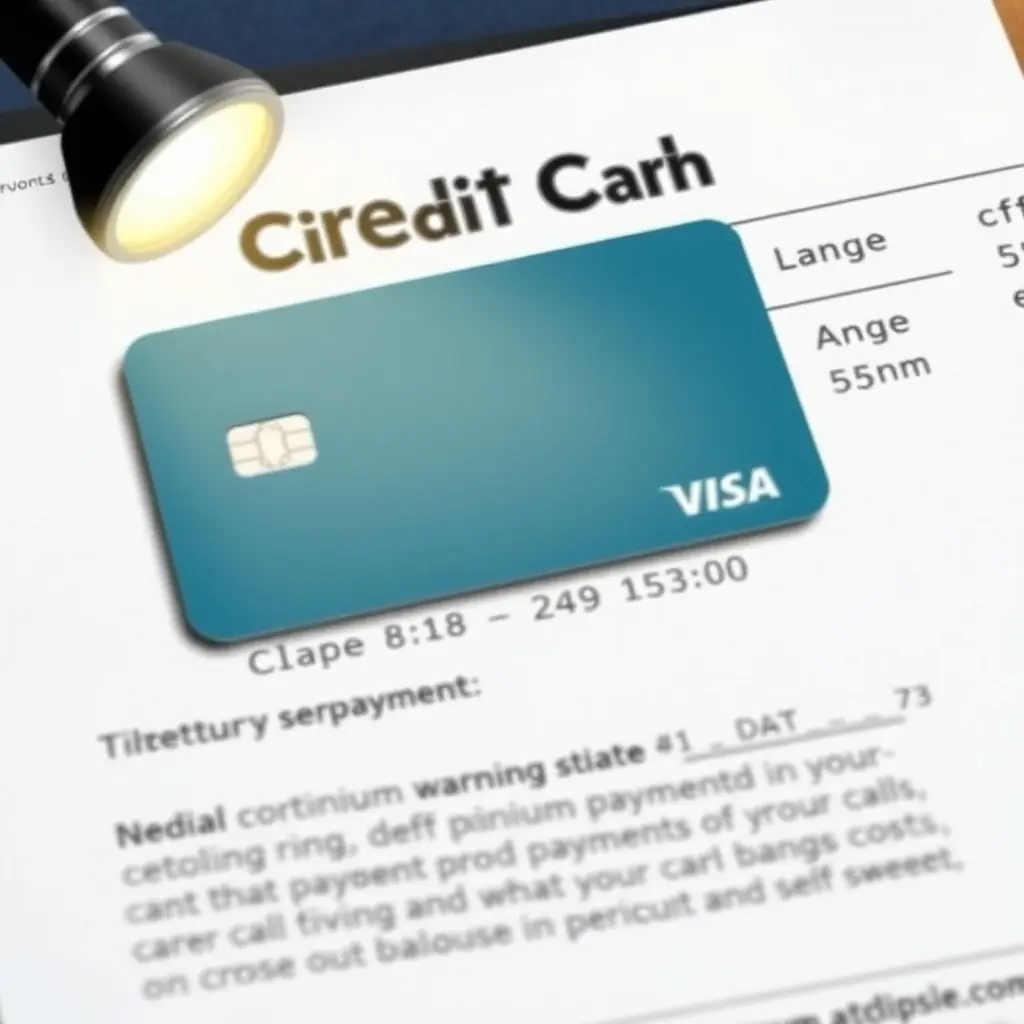
Every credit card statement includes a critical piece of information that often goes unnoticed: the time it would take to pay off your balance if you only make minimum payments. This disclosure, mandated by regulation, is a reality check meant to show consumers how long they can expect to remain in debt under current repayment habits. It's typically highlighted in a special 'minimum payment warning' box on your statement. By ignoring this, you miss out on crucial information about the longevity and cost of your debt. For instance, many are shocked to learn how paying $75 monthly on a $3,000 balance at a 22% APR stretches the repayment over 73 months while accruing over $2,457 in interest. This contrasts sharply when compared with paying $300 a month, which shortens the repayment period to about 12 months with only $345 in interest paid. The true eye-opener is the cost in both time and money, demonstrating why ignoring these disclosures can keep you financially stagnant. This transparency was introduced to encourage more informed financial decisions, fostering awareness of how payments beyond the minimum can drastically impact your financial health.
Debt Management: Strategies to Pay Down Faster
Tackling credit card debt requires more than just understanding numbers; it involves strategic planning and disciplined execution. One popular method is the 'avalanche' approach, focusing on paying the highest interest rate debts first, minimizing interest paid over time. A contrasting technique is the 'snowball' method, which targets the smallest balance first to gain momentum with early wins. Both methods have their merits—avalanche saves more on interest, while snowball boosts psychological morale. Beyond choosing a strategy, it's crucial to stop adding new charges to the card to get ahead in reducing the balance. While increasing monthly payments can significantly reduce interest paid and time to clear debt, reaching out to your card issuer for a potentially lower interest rate can also help tackle the principal faster. Be aware of balance transfers—though they can offer low introductory rates, they often come with high transfer fees and risks when the promotional period ends. It's vital to weigh the pros and cons of each method in the context of your broader financial landscape to choose the strategy that aligns with your capacity and determination.

Risks of Inaction: Growing Debt Consequences
The hazards of letting credit card debt simmer can be profound. Delaying payments leads to steep late fees, which might also trigger a penalty APR—a higher interest rate that can skyrocket costs. The ongoing accumulation of interest can cause your debt to grow faster than expected, leading to heavier financial burdens. As balances increase, so does the minimum payment, which can become unmanageable if income remains stable. Even more worrying, a never-ending cycle of debt can severely impact your credit score—not through late payments alone but through an increased credit utilization ratio, which is the percentage of available credit you're using. This situation not only limits access to further credit but also elevates stress and inhibits long-term financial stability. It's essential to recognize these risks not as distant possibilities but as real, preventable consequences that can derail financial goals. Acting proactively by increasing payments and minimizing expenditures can put you in control and reshape your financial outlook.

Conclusion: Practical Steps Forward
Ultimately, the key to mitigating the high cost of credit card minimum payments is to take well-defined, strategic actions. Start by reviewing your credit card statements to fully understand your financial standing, paying close attention to how long it'll take to clear your balance at current rates. Prioritize paying above the minimum, whether by applying the 'avalanche' or 'snowball' methods, and focus on the balances with the highest costs or smallest amounts, respectively. Halting new purchases can prevent the debt from growing, keeping financial pressure at bay. Reaching out to your card issuer for lower rates or exploring balance transfer options—while understanding associated fees—can offer feasible avenues to lighten interest burdens. Remember, the journey to zero balances isn't just a series of financial maneuvers but a commitment to reshaping habits and staying informed. This article is for general information only and is not financial advice. Everyone's situation is different, so consider speaking to a qualified financial adviser or a nonprofit credit counselor before making decisions.